NSL – Netzwerk Stadt und Landschaft ETH Zürich
  • Progetti
      • Progetti delle cattedre
        • Prof. Dr. Bryan T. Adey | Gestione delle infrastrutture
        • Prof. Dr. Tom Avermaete | Storia e teoria dell’urbanistica
        • Prof. Dr. Francesco Corman | Sistemi di trasporto
        • Prof. Teresa Galí-Izard | Chair of Being Alive
        • Prof. Dr. Adrienne Grêt-Regamey | Pianificazione paesaggistica e sistemi urbani
        • Prof. Dr. Eva Heinen | Pianificazione del traffico e della mobilità
        • Prof. Dr. David Kaufmann | Sviluppo del territorio e politica urbana
        • Prof. Hubert Klumpner | Architettura e Urbanistica
        • Dr. Anastasios Kouvelas | Ingegneria e controllo del traffico
        • Prof. Freek Persyn | Cattedra di Architettura e Trasformazione urbana NEWROPE
        • Prof. Milica Topalovic | Architettura e pianificazione territoriale
        • Dr. Jennifer Duyne Barenstein | ETH Wohnforum – ETH CASE
        • NSL-Archiv
      • Ex cattedre
      • Colloqui NSL – Il colloquio NSL è una presentazione semestrale di lavori eccellenti. Il tema viene stabilito di volta in volta dal professore che presenta l’invito.
      • Progetti NSL
          • E-Bike City
          • Future Cities Lab Global
          • Urbane Potentiale und Strategien in metropolitanen Territorien
 – am Beispiel des Metropolitanraums Zürich (NFP65)
          • Large-scale Virtualization and Modeling Lab (LVML)
      • NSL Forum
        • NSL Forum & Cycling Research Board
        • NSL Forum: Pandemie? Mitten im Klimawandel. Was bedeutet das für die räumliche Entwicklung der Schweiz? Ein Dialog.
    Close
  • Insegnamento
    • Insegnamento
        • Bachelor e Master dipartimento ARCH
        • Bachelor e master dipartimento BAUG
        • MSc in Sviluppo territoriale e sistemi infrastrutturali
        • MAS/CAS in Regenerative Materials
        • CAS ETH in Regenerative Systems: dalla sostenibilità alla rigenerazione
        • MAS/CAS Pianificazione del territorio
        • MAS Urban and Territorial Design
        • MAS ETH in edilizia abitativa
        • Doctoral Programme in Landscape and Urban Studies
      • La conoscenza delle forze decisive per lo sviluppo del territorio e la loro interazione, nonché la capacità di sviluppo di strategie risolutive per problematiche territoriali rappresentano i presupposti centrali per lo svolgimento responsabile ed efficace di funzioni di pianificazione al servizio della collettività e di imprese private. Altrettanto importanti sono la formazione, il perfezionamento e l'agggiornamento universitari nel settore della pianificazione territoriale, urbana e del paesaggio. Dal 1965 l'ETH di Zurigo offre corsi di aggiornamento e percorsi di studi post-laurea (NDS, oggi MAS) in questo ambito. I corsi sono gestiti dalla Rete Scientifica Città e Paesaggio (NSL).
    Close
  • Pubblicazioni
    • Newsletter – NSL riunisce esperti dell’ETH di Zurigo e cura il dialogo con altri ambienti che si occupano o si interessano di questioni relative alla città e al paesaggio.
    • Example Book Pages from "Working on Transformation"Pubblicazioni delle cattedre di NSL – Un elenco completo delle pubblicazioni con funzioni di ricerca avanzate è disponibile al seguente link:
      • ETH Zürich Research Collection
    • disP Cover, Ausgabe 61/2, September 2025disP – The Planning Review – La rivista scientifica interdisciplinare tratta temi legati a sviluppo territoriale, urbanistica, pianificazione paesaggistica e ambientale, architettura del paesaggio, economia regionale e ambientale e pianificazione del traffico.
      • Istruzioni per autori / autrici
      • Tipi di articoli
      • Guida per la stesura di recensioni letterarie
      • Redazione
      • Ultimo numero
      • facebook
    • DELUS Cover Issue 1DELUS – Journal for Landscape and Urban Studies – DELUS è una pubblicazione annuale dell’Istituto di studi urbani e del paesaggio dell’ETH di Zurigo.
    Close
  • Attualità
  • Contatto
      • it
        • de
        • en
        • fr
      • Search

    • Close
      • it
        • de
        • en
        • fr

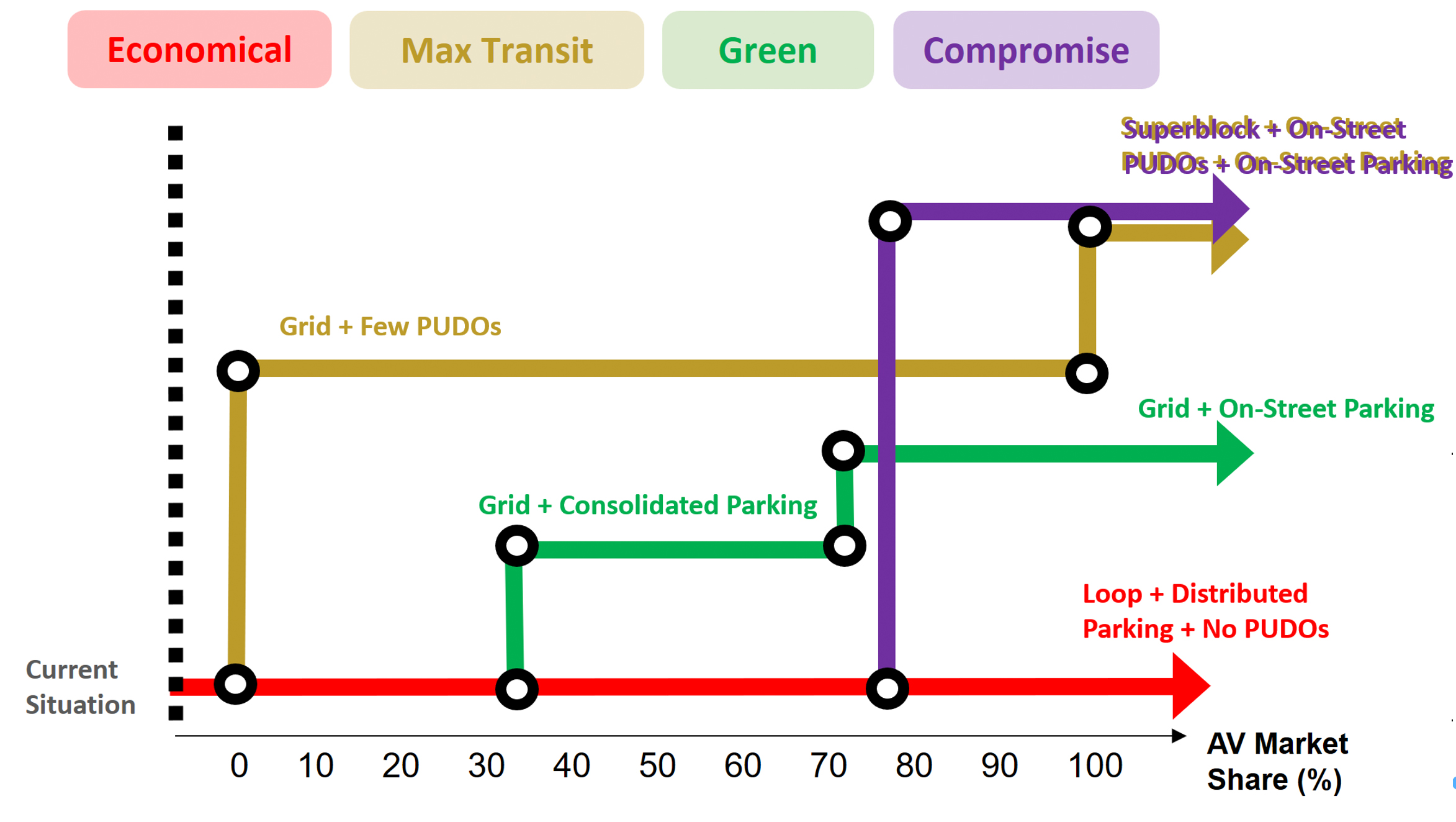
Adaptive plans represented in a pathways map

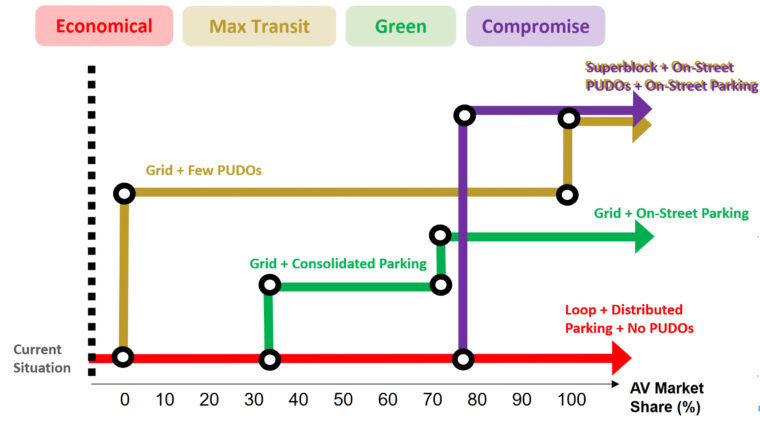
Adaptive plans represented in a pathways map. In the x-axis the «AV Market Share» is used as the indicator to trigger interventions over time (nodes in the map). Three single-objective plans are shown: The «Economical» pathway minimises investments, the «Max Transit» pathway maximises public transport use and the green pathway minimises carbon emissions. Additionally, a «Compromise» pathway is shown, as an alternative that can balance the three objectives altogether © Infrastructure Management Group, ETH Zürich.

Share this...
  • Facebook
  • Linkedin
  • Whatsapp
  • Email

Cattedre

Adaptive plans represented in a pathways map. In the x-axis the «AV Market Share» is used as the indicator to trigger interventions over time (nodes in the map). Three single-objective plans are shown: The «Economical» pathway minimises investments, the «Max Transit» pathway maximises public transport use and the green pathway minimises carbon emissions. Additionally, a «Compromise» pathway is shown, as an alternative that can balance the three objectives altogether © Infrastructure Management Group, ETH Zürich.

Prof. Dr. Bryan T. Adey
Prof. Dr. Tom Avermaete
Prof. Maria Conen
Prof. Dr. Francesco Corman
Dr. Jennifer Duyne Barenstein
Prof. Teresa Galí-Izard
Prof. Dr. Adrienne Grêt-Regamey
Prof. Dr. Guillaume Habert
Prof. Dr. Eva Heinen
Prof. Damian Jerjen
Prof. Dr. David Kaufmann
Prof. Hubert Klumpner
Dr. Anastasios Kouvelas
Prof. Freek Persyn
Prof. Milica Topalovic
Prof. Martina Voser

Contatto

Adaptive plans represented in a pathways map. In the x-axis the «AV Market Share» is used as the indicator to trigger interventions over time (nodes in the map). Three single-objective plans are shown: The «Economical» pathway minimises investments, the «Max Transit» pathway maximises public transport use and the green pathway minimises carbon emissions. Additionally, a «Compromise» pathway is shown, as an alternative that can balance the three objectives altogether © Infrastructure Management Group, ETH Zürich.

Indirizzo
ETH Zürich
NSL – Netzwerk Stadt und Landschaft
Stefano-Franscini-Platz 5
HIL H 44.2
8093 Zürich

Direzione NSL
Direttrice: Prof. Dr. Milica Topalović
Vicedirettrice: Prof. Dr. Eva Heinen

Ufficio di coordinamento NSL
Claudia Gebert
Telefono: +41 (0)44 633 36 33


Iscriviti alla newsletter della NSL

Redazione disP

Adaptive plans represented in a pathways map. In the x-axis the «AV Market Share» is used as the indicator to trigger interventions over time (nodes in the map). Three single-objective plans are shown: The «Economical» pathway minimises investments, the «Max Transit» pathway maximises public transport use and the green pathway minimises carbon emissions. Additionally, a «Compromise» pathway is shown, as an alternative that can balance the three objectives altogether © Infrastructure Management Group, ETH Zürich.

Caporedattore
Prof. Dr. David Kaufmann

Redatrice responsabile
Dr. sc. techn. Martina Koll-Schretzenmayr, pianificatrice territoriale ETH/NDS,
Telefono +41 (0)44 633 29 47

Indirizzo
ETH Zürich
Redaktion disP
NSL – Netzwerk Stadt und Landschaft
Stefano-Franscini-Platz 5
HIL H 33.3
8093 Zürich
email redazione disP

Archivio NSL (gta)

Adaptive plans represented in a pathways map. In the x-axis the «AV Market Share» is used as the indicator to trigger interventions over time (nodes in the map). Three single-objective plans are shown: The «Economical» pathway minimises investments, the «Max Transit» pathway maximises public transport use and the green pathway minimises carbon emissions. Additionally, a «Compromise» pathway is shown, as an alternative that can balance the three objectives altogether © Infrastructure Management Group, ETH Zürich.

Archivio storico e di ricerca per l’architettura
del paesaggio e la pianificazione ambientale svizzere

Contatto

Richieste di consultazione


Protezione dei dati