NSL – Netzwerk Stadt und Landschaft ETH Zürich
  • Projects
      • Projects of the Chairs
        • Prof. Dr. Bryan T. Adey | Infrastructure Management
        • Prof. Dr. Tom Avermaete | History and Theory of Urban Design
        • Prof. Dr. Francesco Corman | Transport Systems
        • Prof. Teresa Galí-Izard | Chair of Being Alive
        • Prof. Dr. Adrienne Grêt-Regamey | Planning of Landscape and Urban Systems (PLUS)
        • Prof. Dr. Eva Heinen | Transportation and Mobility Planning
        • Prof. Dr. David Kaufmann | Spatial Development and Urban Policy
        • Prof. Hubert Klumpner | Architecture and Urban Design
        • Dr. Anastasios Kouvelas | Traffic Engineering and Control
        • Prof. Freek Persyn | NEWROPE Chair of Architecture and Urban Transformation
        • Prof. Milica Topalovic | Architecture and Territorial Planning
        • Dr. Jennifer Duyne Barenstein | ETH Wohnforum – ETH CASE
        • NSL-Archiv
      • Former Chairs
      • NSL Colloquia – The NSL Colloquia are a bi-annual presentation of exceptional work under a rotating theme determined by the inviting professor.
      • NSL Projects
          • E-Bike City
          • Future Cities Lab Global
          • Urban Potential and Strategies in Metropolitan Territories
 – The Zurich Metropolitan Region as an Example (NFP65)
          • Large-scale Virtualization and Modeling Lab (LVML)
      • NSL Forum
        • NSL Forum & Cycling Research Board
        • NSL Forum: Pandemie? Mitten im Klimawandel. Was bedeutet das für die räumliche Entwicklung der Schweiz? Ein Dialog.
    Close
  • Teaching
    • Teaching
      • Bachelor and Master Degree Programmes, Department ARCH
      • Bachelor and Master Degree Programmes, Department BAUG
      • MSc in Spatial Development and Infrastructure Systems
      • MAS/CAS in Regenerative Materials
      • CAS ETH in Regenerative Systems: Sustainability to Regeneration
      • MAS/CAS Spatial Development
      • MAS Urban and Territorial Design
      • MAS in Housing
      • Doctoral Programme in Landscape and Urban Studies
      • The teaching component of the NSL seeks to impart the knowledge and skills needed to develop the standard strengths of spatial planning and their interaction as well as the ability to develop strategies for the solution of spatial problems. These are central prerequisites for a responsible and successful exercise of planning functions in the service of the public commonwealth and of private companies. Especially important in fufilling these prerequisites is the quality of university-level education: graduate and post-graduate work as well as professional development in spatial, urban and landscape planning. The ETH Zurich has offered programmes such as continuing education courses and post-graduate programmes (NDS, now MAS) since 1965. The NSL (Network City and Landscape) is responsible for these courses and programmes.
    Close
  • Publications
    • NSL Newsletter – The NSL brings the experts at ETH Zurich together and also maintains a dialogue with other groups that deal with or are interested in issues relating to cities and landscapes.
    • Example Book Pages from "Working on Transformation"Publications of NSL Chairs – A complete list of publications can be reached via the following link, which also includes advanced search capabilities:
      • ETH Zürich Research Collection
    • disP Cover, Ausgabe 61/2, September 2025disP – The Planning Review – The interdisciplinary scientific journal covers the topics of spatial development, urban planning, landscape and environmental planning, landscape architecture, traffic planning, and regional and environmental economics, as well as special issues on specific themes.
      • Instructions for Authors
      • Types of Articles
      • Book Review Guidelines
      • Editorial Team
      • Latest Issue
      • facebook
    • DELUS Cover Issue 1DELUS – Journal for Landscape and Urban Studies – DELUS is an annual publication by the Institute of Landscape and Urban Studies at ETH Zürich.
    Close
  • News
  • Contact
      • en
        • de
        • fr
        • it
      • Search

    • Close
      • en
        • de
        • fr
        • it

Urbane Ressourcen

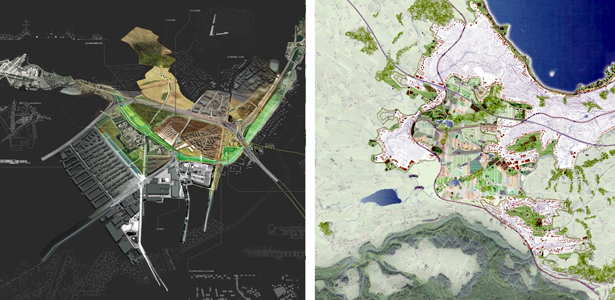
Das Teilprojekt Urbane Ressourcen widmet sich der Identifizierung und Aktivierung von Potentialen und Synergiemöglichkeiten des spezifischen urbanen Bestandes. Wie und mit welchen Mitteln können Qualifizierungsstrategien für deren Erschliessung entworfen werden und wie können ihre Wirkungen und Effekte abgeschätzt, bewertet und beeinflusst werden? Parallel dazu stellen sich die Fragen nach der Rolle des städtebaulichen Entwurfs als erkenntnisgewinnende Methode und der Erfassung und Konzeptionalisierung von relevanten Akteurs- und Kräftekonstellationen.

Der Begriff Urbane Ressourcen bezeichnet in diesem Teilprojekt bislang ungenutzte, strategische, zur Qualifizierung urbaner Situationen aktivierbare Potentiale des spezifischen urbanen Bestands sowie  für den städtebaulichen Transformationsprozess einsetzbare Mittel. Über die zusätzliche Betrachtung von Akteurinnen und Akteuren als Treiber der Raumproduktion soll untersucht werden, wie städtebauliche Umbau- und Qualifikationsprozesse katalysiert, in Gang gesetzt oder beschleunigt werden können.

Das Vorgehen kombiniert Elemente des Entwurfs im Sinne eines induktiven heuristischen Werkzeugs mit empirischen und deduktiven Methoden, die insbesondere in der Vorbereitungs- und der Evaluationsphase eingesetzt werden. Es hilft durch explizite Konzentration auf die konkrete Kontextkonstellation einer urbanen Situation und deren Bedingungen empirische und statistische Methoden und Modellbildungen zu ergänzen und damit Qualitäten zu integrieren, die sich bislang einer klassischen analytischen und projektierenden Praxis der Planung entziehen. Dabei wird mit Hilfe empirischer und phänomenologischer Analysen eine Bestandesaufnahme der urbanen Situation erstellt und bewertet. Diese wird in der zweiten Phase der radikalen Transformationsprojektionen auf Bedingungen und Grenzen befragt. So können erste Aussagen zu kontextspezifischen Entwicklungspotentialen abgeleitet werden. Auf dieser Basis werden mögliche städtebauliche Konzepte erarbeitet, die wiederum in Projekttests in Bezug auf ihre Tauglichkeit und Zielführung bewertet werden. Hieraus sollen spezifische Strategien für die Erschliessung von urbanen Potentialen abgleitet und diskutiert werden.

Teilprojekt des Projektes Urbane Potentiale und Strategien in metropolitanen Territorien
Simon Kretz (Dipl. ARCH ETH) ist wissenschaftlicher Mitarbeiter an der Professur von Kees Christiaanse, Institut für Städtebau. Ausserdem ist er Mitbegründer von Christina Nater & Simon Kretz Architects, ein Büro für Architektur und Urban Design.

Share this...
  • Facebook
  • Linkedin
  • Whatsapp
  • Email
This article has been published in the following newsletter edition:

16 | Dezember 2012: Nationalfondsprojekt 65: Neue Urbane Qualität

  • Siedlungsqualität steigern
  • SUPat – Sustainable Urban Patterns: Neue Instrumente zur Verbesserung des Planungsdialogs
  • Urbaner Raum: Städtebauliche Elemente
  • Urbaner Raum: Öffentliche Freiräume
  • Urbane Prozesse: Sozialräumliche Prozesse
  • Urbane Ressourcen
  • Entwerfen im Kontext der zeitgenössischen Stadt
Kurzmeldungen
  • Zehn Jahre NSL: eine Werkdiskussion
  • Symposium «Topologie. Zur Gestaltung der gegenwärtigen Landschaft»
  • UNIFORM – Studying efficiency of urban patterns
  • Urban Food: Praxis und Theorie
Publikationen
  • Torre David. Informal Vertical Communities
  • A multi-model approach to large-scale multiagent transport simulation
  • Topologie/Topology
  • Der Wert der Natur für Wirtschaft und Gesellschaft
  • Productivity improvements for freight railways through collaborative transport planning

Chairs

Prof. Dr. Bryan T. Adey
Prof. Dr. Tom Avermaete
Prof. Maria Conen
Prof. Dr. Francesco Corman
Dr. Jennifer Duyne Barenstein
Prof. Teresa Galí-Izard
Prof. Dr. Adrienne Grêt-Regamey
Prof. Dr. Guillaume Habert
Prof. Dr. Eva Heinen
Prof. Damian Jerjen
Prof. Dr. David Kaufmann
Prof. Hubert Klumpner
Dr. Anastasios Kouvelas
Prof. Freek Persyn
Prof. Milica Topalovic
Prof. Martina Voser

Contact

Address
ETH Zürich
NSL – Netzwerk Stadt und Landschaft
Stefano-Franscini-Platz 5
HIL H 44.2
8093 Zürich

NSL Director
Director: Prof. Dr. Milica Topalović
Deputy Director: Prof. Dr. Eva Heinen

NSL Coordination
Claudia Gebert
Telephone: +41 (0)44 633 36 33


Register for the NSL Newsletter

disP Publication Office

Editor-in-Chief
Prof. Dr. David Kaufmann

Managing Editor
Dr. sc. techn. Martina Koll-Schretzenmayr, Spatial planner ETH/NDS,
Telephone +41 (0)44 633 29 47

Mailing address
ETH Zürich
Redaktion disP
NSL – Netzwerk Stadt und Landschaft
Stefano-Franscini-Platz 5
HIL H 33.3
8093 Zürich
Email disP editorial team


NSL Archive (gta)

Research and Bequest Archive for
Swiss Landscape Architecture and Spatial Planning

Contact

Consultation Requests


Privacy Policy