NSL – Netzwerk Stadt und Landschaft ETH Zürich
  • Projects
      • Projects of the Chairs
        • Prof. Dr. Bryan T. Adey | Infrastructure Management
        • Prof. Dr. Tom Avermaete | History and Theory of Urban Design
        • Prof. Dr. Francesco Corman | Transport Systems
        • Prof. Teresa Galí-Izard | Chair of Being Alive
        • Prof. Dr. Adrienne Grêt-Regamey | Planning of Landscape and Urban Systems (PLUS)
        • Prof. Dr. Eva Heinen | Transportation and Mobility Planning
        • Prof. Dr. David Kaufmann | Spatial Development and Urban Policy
        • Prof. Hubert Klumpner | Architecture and Urban Design
        • Dr. Anastasios Kouvelas | Traffic Engineering and Control
        • Prof. Freek Persyn | NEWROPE Chair of Architecture and Urban Transformation
        • Prof. Milica Topalovic | Architecture and Territorial Planning
        • Dr. Jennifer Duyne Barenstein | ETH Wohnforum – ETH CASE
        • NSL-Archiv
      • Former Chairs
      • NSL Colloquia – The NSL Colloquia are a bi-annual presentation of exceptional work under a rotating theme determined by the inviting professor.
      • NSL Projects
          • E-Bike City
          • Future Cities Lab Global
          • Urban Potential and Strategies in Metropolitan Territories
 – The Zurich Metropolitan Region as an Example (NFP65)
          • Large-scale Virtualization and Modeling Lab (LVML)
      • NSL Forum
        • NSL Forum & Cycling Research Board
        • NSL Forum: Pandemie? Mitten im Klimawandel. Was bedeutet das für die räumliche Entwicklung der Schweiz? Ein Dialog.
    Close
  • Teaching
    • Teaching
      • Bachelor and Master Degree Programmes, Department ARCH
      • Bachelor and Master Degree Programmes, Department BAUG
      • MSc in Spatial Development and Infrastructure Systems
      • MAS/CAS in Regenerative Materials
      • CAS ETH in Regenerative Systems: Sustainability to Regeneration
      • MAS/CAS Spatial Development
      • MAS Urban and Territorial Design
      • MAS in Housing
      • Doctoral Programme in Landscape and Urban Studies
      • The teaching component of the NSL seeks to impart the knowledge and skills needed to develop the standard strengths of spatial planning and their interaction as well as the ability to develop strategies for the solution of spatial problems. These are central prerequisites for a responsible and successful exercise of planning functions in the service of the public commonwealth and of private companies. Especially important in fufilling these prerequisites is the quality of university-level education: graduate and post-graduate work as well as professional development in spatial, urban and landscape planning. The ETH Zurich has offered programmes such as continuing education courses and post-graduate programmes (NDS, now MAS) since 1965. The NSL (Network City and Landscape) is responsible for these courses and programmes.
    Close
  • Publications
    • NSL Newsletter – The NSL brings the experts at ETH Zurich together and also maintains a dialogue with other groups that deal with or are interested in issues relating to cities and landscapes.
    • Performance-led design process. Left: the current performance of a polder area managed by one sluice (arrow) within the floodplain of Antananarivo is assessed to guide design decisions. Middle: landscape architects intervene through precise topographic modifications to propose a new waterfront, reservoir, fishponds, canals, and fields derived from existing site forms. Right: the design process evolves through continuous iterations between topographic design and performance testing, using hydrological simulations to evaluate and refine proposals until a functional and satisfactory outcome is achieved. © ETH ZürichPublications of NSL Chairs – A complete list of publications can be reached via the following link, which also includes advanced search capabilities:
      • ETH Zürich Research Collection
    • Cover disP 61, March 2025disP – The Planning Review – The interdisciplinary scientific journal covers the topics of spatial development, urban planning, landscape and environmental planning, landscape architecture, traffic planning, and regional and environmental economics, as well as special issues on specific themes.
      • Instructions for Authors
      • Types of Articles
      • Book Review Guidelines
      • Editorial Team
      • Latest Issue
      • facebook
    • DELUS Cover Issue 1DELUS – Journal for Landscape and Urban Studies – DELUS is an annual publication by the Institute of Landscape and Urban Studies at ETH Zürich.
    Close
  • News
  • Contact
      • en
        • de
        • fr
        • it
      • Search

    • Close
      • en
        • de
        • fr
        • it

The Aerial Gaze: Iterative Aerial Site Scanning for Landscape Analysis, Planning, and Design

The aerial view allows a vantage point from which to capture photographs, video, and non-visual sensor data of diverse landscape locations. A flexible, fast and simple means of landscape surveying, it has made possible the repeated capture of sites under constant change, whether environmental, cultural, programatic, or land-use.

The mobile Landscape Visualisation and Modeling Lab (LVML) unit ensures all sites are accessible through lightweight UAV platforms (unpiloted aerial vehicle platforms), the entire process is now refined and automated into an efficient on and offsite workflow.

The Landscape Visualisation and Modeling Lab (LVML) has been developing methods for the aerial capture of landscapes and territories since its inauguration in 2010. Founded by Prof. Christophe Girot and Prof. Adrienne Grêt Regamey, this interdisciplinary laboratory works from the territorial planning scale to the micro-climatic site detail. The use of various UAV aerial platforms have formed a key part of this research, landscape analysis, and project use.

The process of aerial site capture has been refined in research projects within the MAS Landscape Architecture course, in which students focus for 12 months on one site and associated design issues. This has allowed previous students to scan their landscape site, and repeat the procedure over the course of the year, generating a nuanced dataset of land-use and ecology. The integration of photogrammetry techniques also generate a highly detailed terrain and object model of each flight, allowing physical change, however temporary, to be mapped in detail.

The Potential of On-Site Data Collection and the Aerial Perspective

The resulting data included repeated seasonal territorial scanning, generating various levels of site information. The scans of the Linth Plain, south of the lake of Zurich, resulted in clear seasonal shifts in colour, vegetation, and agricultural use. The types, density, diversity and heights of the various crops and forested areas could be measured and quantified, revealing the local agricultural cycles. The materiality of the landscape, including changes in areas of asphalt, concrete, bare earth and areas of erosion can be measured.

The influence of weather events such as snow and torrential rains can be measured in area and depths, through comparison with previous site models. Specific cultural events, land use change, and temporary built structures can be detected, through automated model comparison.

Through developing and implementing these techniques within the landscape design process, the reliance on officially and commonly available site data has been alleviated, allowing a deeper understanding of the dynamics of landscape sites. Whether in data-rich Switzerland, or in the home countries of many of our international students, the massive potential of on-site data collection and the aerial perspective is clear.

James Melsom is scientific collaborator and coordinator of the LVML at the chair of Christophe Girot for landscape architecture.

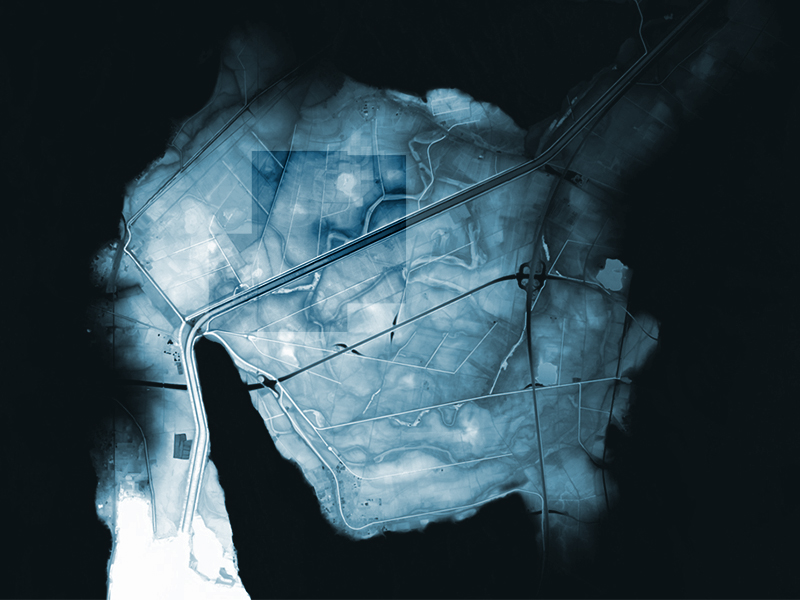
Top Image: Swisstopo Data of the Linth Plain, supplemented and compared with detailed seasonal aerial data: surface model, vegetation, and materialisation (centre).
NL30: The Aerial Gaze: Iterative Aerial Site Scanning for Landscape Analysis, Planning, and Design

Image: An excerpt of the overlapping aerial images acquired during summer by UAV on the Linth Plain site.
NL30: The Aerial Gaze: Iterative Aerial Site Scanning for Landscape Analysis, Planning, and Design
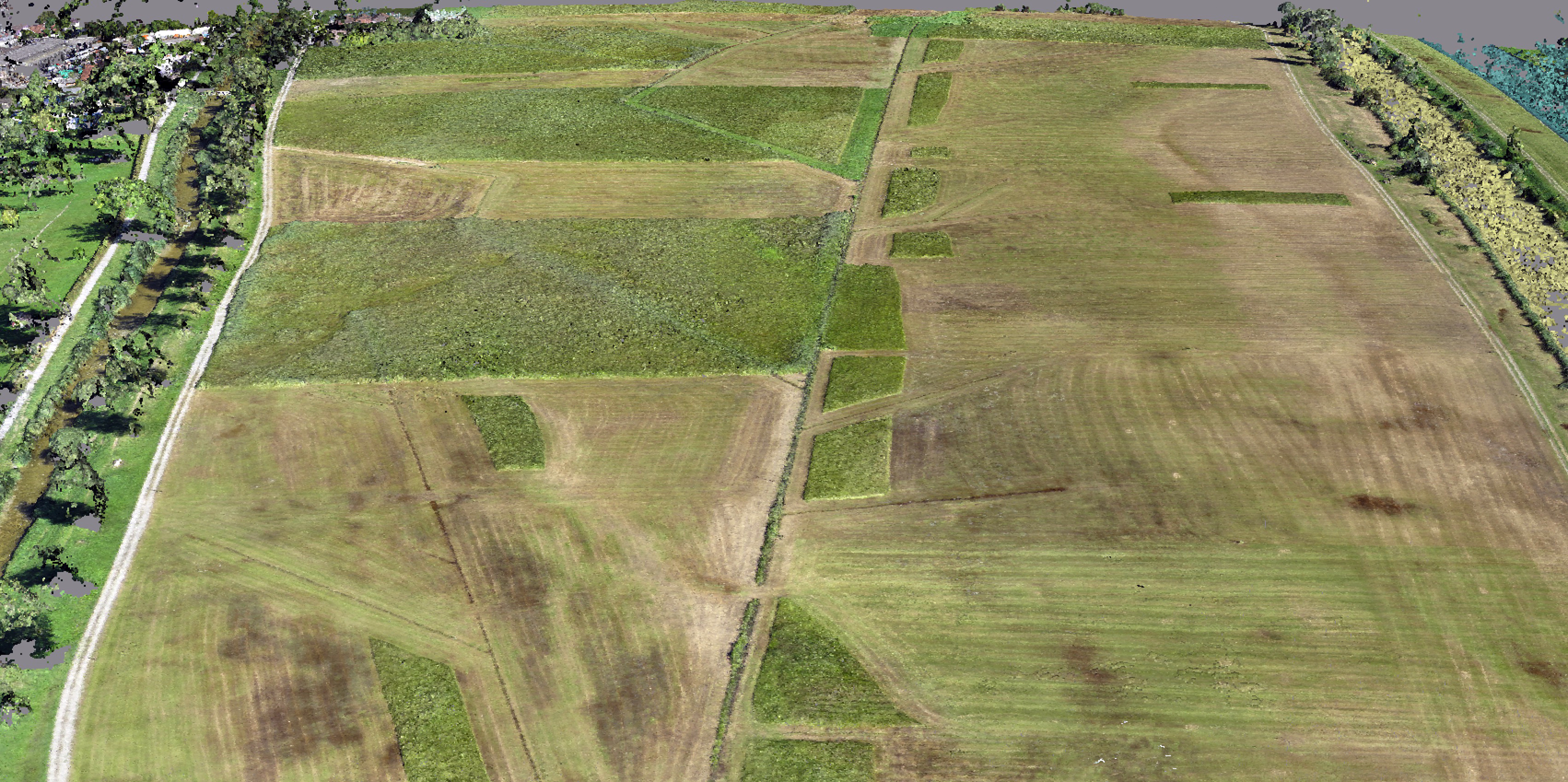
Image: Detail of the 18 million point-cloud resulting from the photogrammetric processing of aerial images along the Linth Canal.
Share this...
  • Facebook
  • Linkedin
  • Whatsapp
  • Email
This article has been published in the following newsletter edition:

30 | Juni 2016: Vogelperspektive

  • Gotthard Landscape – Neue Perspektiven für eine verschollene Landschaft
  • Modeling Future Urban Scenarios for Switzerland
  • Bad for Traffic: Swiss Drivers Change Lanes too Early in Weaving Areas
  • The Aerial Gaze: Iterative Aerial Site Scanning for Landscape Analysis, Planning, and Design
  • The Noise Landscape: an Emerging Urban Landscape
  • «Wohnforschung wird an Bedeutung noch weiter zunehmen»
Kurzmeldungen
  • Ecopotential
Publikationen
  • NEAT – AlpTransit Lötschberg und Gotthard
  • Exploring the choice between in-store and online shopping
  • The Course of Landscape Architecture. A History of our Designs on the Natural World, from Prehistory to the Present
  • Urban Breeding Grounds
  • The effects of on-street parking on the service rate of nearby intersections

Chairs

Prof. Dr. Bryan T. Adey
Prof. Dr. Tom Avermaete
Prof. Maria Conen
Prof. Dr. Francesco Corman
Dr. Jennifer Duyne Barenstein
Prof. Teresa Galí-Izard
Prof. Dr. Adrienne Grêt-Regamey
Prof. Dr. Guillaume Habert
Prof. Dr. Eva Heinen
Prof. Damian Jerjen
Prof. Dr. David Kaufmann
Prof. Hubert Klumpner
Dr. Anastasios Kouvelas
Prof. Freek Persyn
Prof. Milica Topalovic
Prof. Martina Voser

Contact

Address
ETH Zürich
NSL – Netzwerk Stadt und Landschaft
Stefano-Franscini-Platz 5
HIL H 44.2
8093 Zürich

NSL Director
Director: Prof. Dr. Milica Topalović
Deputy Director: Prof. Dr. Eva Heinen

NSL Coordination
Claudia Gebert
Telephone: +41 (0)44 633 36 33


Register for the NSL Newsletter

disP Publication Office

Editor-in-Chief
Prof. Dr. David Kaufmann

Managing Editor
Dr. sc. techn. Martina Koll-Schretzenmayr, Spatial planner ETH/NDS,
Telephone +41 (0)44 633 29 47

Mailing address
ETH Zürich
Redaktion disP
NSL – Netzwerk Stadt und Landschaft
Stefano-Franscini-Platz 5
HIL H 33.3
8093 Zürich
Email disP editorial team


NSL Archive (gta)

Research and Bequest Archive for
Swiss Landscape Architecture and Spatial Planning

Contact

Consultation Requests


Privacy Policy